Blogaqurium

The Syndicated Surfaquarium

Walter's Blog Archive:

.

___________________________________________________________________________

Sunday, September 16, 2012

Walk On


I spent time this weekend visiting a place that has been very significant to me, especially over the last year. I did it to come to terms with the fact that I can’t go ba­ck.

I know they say you can’t go home again. But I found I could go home again when I returned to Massachusetts in the early two-thousands. So I thought I could apply this here. I was wrong.

This visit, my best friend was no longer available to me. The sights didn’t seem as exciting. The food didn’t seem as great. Nothing matched my memories. I was simply visiting a place that used to be where I felt grounded…and now I’m just a visitor.

I share this with you because, as we move forward into whatever the future holds for us as educators and as people, as much as we want to…we can’t go back. Our memories are wonderful, our intentions are laudable, but the reality is once things have changed for us there is no going back…because there is no way to recreate the people and circumstances that came together at a fondly recalled place in time.

Perhaps we hold on to what we knew and loved because it was a time of growth and success. Perhaps we made assumptions that those people and circumstances would remain constants in our lives.­­­ Perhaps the comfort and familiarity of what we have known brings us warmth and happiness we don’t want to lose. Whatever the reason…no matter how well-intended, sooner or later reality hits and we suddenly come to terms with the fact that we’re not as well-grounded as we used to be or we want to be. We need to let go and move forward.

It’s ok. It’s alright. It’s not the end of the world. You accept you can’t go back…that things cannot be the same. It has to sink in for a while. And you will fight the fact before you finally accept it. But once you finally finish resisting the reality, something incredibly powerful happens. You look around. You become centered in who you are where you are now, and you start to focus your energies not on recapturing the security of your past but in realizing the promise of your future.

I talked to a wise confidantey of mine about this, and she said, “You make it sound like if you accept the past is over, there’s nothing to look forward to in the future! Why shut yourself off from all the potential you have in the years ahead? Who knows what might come your way…even bigger and better than what you’ve had!” She was right. Somehow in coming to terms with the fact that I can’t go back I was jumping to a place where I felt resigned that life as I knew it was over…and that’s a dangerous place to live. In fact, it didn’t feel like living at all. It felt limiting and frustrating and final.

And so I say to each of you as friends and colleagues, wherever your career is taking you…wherever your life is taking you…it’s ok. Don’t allow yourself to think of it as accepting the inevitable. You will have new opportunities ahead…you just need to be open to the possibilities…to engage yourself in the life you have now…to be alive in the present and learn.

I realize as I write this the reason I could go home to Massachusetts was because I was finding new people and circumstances in which to thrive. The fact that I reconnected with familiar faces and places as I settled in was incidental to my success in returning home. I was not trying to recreate what I remembered so fondly. Can we reconnect with people and situations from our past? Yes I believe so…but only on the new terms of the present moment . There is no going back.

The memories are always there. Be grateful for them and go back and visit as much as you like. But don’t seek to be grounded there. There is no firm footing in the past. Allow yourself to walk on and find your full potential…experience your whole happiness…without reservations or regrets. Life is too short…and you have too much to offer the people and circumstances waiting for you in the days ahead. Walk on...

Walk On lyrics: goo.gl/VtMy6

Sunday, August 26, 2012

"As-Is"...Not "As-If"...


It’s currently popular on social media to share memes that say something to th effect of, “Don’t expect anything and you’ll be grateful for whatever life sends your way!” I am taking issue with this sentiment.

If all you want to do is drift through life rolling with each bump and curve on the landscape, a “no expectations” outlook may be fine. No. Scratch that. Have you ever tried to drive with your eyes focused right where your hood ends and the road begins? Everything that your wheels encounter startles you. You’re not looking ahead to anticipate the traffic and potholes you will encounter in the next minutes. No one drives that way! So why would anyone live their life that way?!

No. Living with no expectations is reckless and foolish. You’re not increasing your capacity to be grateful…you’re preventing yourself from appreciating the big picture by creating artificial short-sighted surprises.

So shake off the false-feel-good memes and self-imposed artificially-induced gratefulness. If we want to leave the world a better place than we found it, we need to raise the bar higher than our current footing. There’s no pleasant surprise getting caught back on our heels.

All this having been said, here are my expectations for the coming academic year:

 - I care.

 - I live my life with passion.

 - I embrace positive energy.

 - I make this world a better place.

 - I give my best and expect as much in return.

 - I grow personally and professionally over time.

 - I live reflectively, thoughtfully, and deliberately with intention.

 - I touch the lives of others in ways that make a good difference.

 - I consciously choose who I keep in my life and who I cannot keep.

 - I give 100% in everything I do.

 - I am patient with myself.

 - I do not live with regret.

 - I don’t make excuses.

 - I don’t settle for less.

Will there be letdowns? Of course. Disappointment is just the difference between where I’ve set the bar and where I find my footing. It’s a good thing…a gut check that helps me reassess and aspire to do better. It’s not based on what anyone else does…it’s defined by me and the standards to which I hold myself. If I’m never disappointed, I’m not setting the bar high enough for myself.

How about you? Are you willing to settle? Are you headed into the new school year willing to kid yourself and accept an existence that is void of your true potential? Do you want to spend another year getting up, looking in the mirror, and forcing yourself to smile because you’d rather pretend “as-if” instead of facing reality “as-is”? You’re not just kidding yourself…your impacting everyone around you…and precious time continues to pass. How many Septembers have you seen already? Set high expectations for the Septembers you have left…beginning this week...keep your eye on the horizon...and make a difference in your life and the world around you!

Sunday, August 19, 2012

“You're Gonna Need a Bigger Boat!”


“You're gonna need a bigger boat!” -Police Chief Brody, Jaws

Three able men are shoveling chum out into the water to attract the menace terrorizing their beaches. Suddenly an image begins to take form beneath the water, circling the small fishing vessel. They assess they are looking at a 25-foot, three ton tiger shark. Police Chief Martin Brody exclaims, “You're gonna need a bigger boat!” A patently obvious observation? Granted…remember the theater breaking out in nervous laughter when Schneider blurted it out in 1975? But as Shark Week concludes it’s also an apt allegory for capacity building...personal capacity building. 

Capacity building typically refers to an organization’s ability to offer new services that add value for those it serves. You have to have the capacity before you attempt to take your services to a higher level. For example, it doesn’t make sense to increase your student body by 300% if you don’t have the staff and room to accommodate three times as many learners. Sure you’d have more revenue from increased enrollments, but you wouldn’t be able to meet everyone’s needs and expectations. You have to have the capacity to handle your goals once you realize them. 

The concept of capacity building holds true for each of us individually. It makes no sense to pursue goals that you aren’t personally ready to handle…because once you arrive at your desired destination, the reality will hit hard that you can’t handle what you thought you wanted. Be careful what you wish for, but more importantly, when you know what you want to go after in life, be sure you have built your inner capacity so you can fully engage and enjoy it! When your ship comes in…do you want to meet it at the docks with a station wagon or an eighteen wheel moving van?

Educators, think of it like instructional scaffolding. We don’t expect students to sink or swim as they work to master new skills and concepts. We provide support for them to build on their strengths and successes as they take risks, make mistakes and learn. The same holds true for us as adults, whether on the job or at home. To build personal capacity we need to be able to push ourselves to take risks, learn and grow. Sounds simple, but what is required?
  1. Push yourself beyond where you are - if you’re too comfortable where you currently live or work, you’re not going to grow
     
  2. Identify new small challenges - nothing earth-shattering; something you can attain using your current skills
     
  3. Commit your personal strengths to meet your challenge - you’re making it a priority to take risks to grow
     
  4. Invest your time and energy to make it happen - stretch yourself to meet and surpass the challenge you’ve set
     
  5. Monitor your progress - be self-aware, learn as you go and make adjustments as needed
     
  6. Be persistent - push yourself and refuse to give up to develop resilience and tenacity
     
  7. Be flexible - consider multiple ways to meet your challenge from different perspectives
     
  8. Hit your target - give yourself credit for progress and know when you meet your challenge
     
  9. Appreciate your new capacity - recognize how meeting your challenge helped you grow
     
  10. Build on little victories - identify new challenges that will push you to grow and build more capacity so that you will eventually realize your goals
If Quint’s boat had the proper capacity to deal with his nemesis, “Jaws” could have ended much differently. No one wants to find themselves sitting in a boat too small to handle the shark encircling it! 

So how about you? How do you want your story to end? Now is the time…today is the day…to start purposefully developing your personal capacity.

Sunday, August 12, 2012

Less Friction. More Traction.


What’s your agenda? Do you know? Do you think you know? How honest are you with yourself? Because if you aren’t honest with yourself, you’re not going to be honest with anyone else.

Everyone has their agenda…the things they are looking to accomplish and get out of life. As we interact with each other, we discover where there are commonalities and differences on one another’s agendas. Most of us are aware of at least the major things we want that are important to us. We work to advance those things in our relationships, both personally and professionally. As we find contexts that foster success, we stay and work in those relationships. In the best contexts, we actually discover more about our personal agenda and learn about ourselves in the process. It’s all about our relationships.

When a relationship ends, it’s because of incompatible agendas. We simply don’t agree or have enough in common anymore to support one another in what we mutually want. How many times have you left a relationship - personal or professional - and you didn’t know why you were dissatisfied and ready to move on? Rarely. Our agendas define who we are and the parameters of what we are willing to do.

Knowing your agenda is to your advantage. You can navigate through life towards those things that are important to you. When faced with choices you can opt to consistently advance your dreams. You don’t feel stuck or wonder how to change your circumstances. You keep moving forward. You know who you are and where you want to be.

So what’s your agenda? If you made a list right now of what you want and what’s important to you, could you do it? Would it be complete? Would you have that nagging feeling that there is more not on the list but you can’t quite put your finger on it? Fight the urge not to identify what that is. It’s too easy to settle for less and then spend your energy wondering why you are who you are, where you are. No one is stuck in life by anything but their own thinking. Only we can make ourselves settle for less.

As we prepare for teachers and students to return to classrooms, I ask you, what is your agenda? Why are you in education? Take thirty minutes this week and make a list of your whys and what-fors. Then look over your agenda and ask yourself, “Are these items all compatible and pointing towards one destination?” If so, you’re deliberately and actively working your agenda. But what if  you find items on your list that conflict with one another and make you lose traction in getting where you want to go? It means you have some soul-searching to do and some choices to make Clean up that agenda and make it work for you. No one ever got anywhere drifting through life, surprising themselves as they react to whatever pops up in front of them.

Not sure how to honestly put your professional agenda down on paper? Then start with your personal life. What do you want for your personal happiness? What do you want and what are you willing to give to have the best, most important relationships in your life thrive? What are you willing to spend and what are you willing to save? What do you need more of and what do you need to remove completely?

Being thoughtful and deliberate about your agenda requires an awareness of what you are doing as you operate each day…and it’s worth the effort. Because as you develop the habits of knowing and furthering your agenda, you will attract others who will support you in your efforts and you remove many of the obstacles and frustrations that you notice in your life right now. You will be true to yourself and contributing to the happiness of those with whom you share common goals. Less friction. More traction.

And what if you find your agenda is not pointing towards your goals for happiness? Maybe it’s time to make some changes…choose different agenda items…end relationships and jobs that undermine your happiness. Frightening to consider? Fear is the number one reason people avoid looking at themselves and taking responsibility for their own happiness. Sadly, it’s easier to blame our circumstances and blame others and settle for less.

The truth is, you can’t choose to be in education and have an agenda that is not consistent with the goals of the profession. To do so is to subject yourself to a frustrating career fraught with episodes of burnout. You’re in the human potential business…make fulfilling your own potential a mindful priority. Your potential for fulfillment. Your potential for happiness. Your potential for peace of mind and satisfaction with your work and relationships. If you don’t do it for you…who will?

Sunday, August 5, 2012

Open the Flood Gates


One of the legacies of the Industrial Age is the ideal of standardization: creating products of consistent quality that can be mass-produced. Coming out of the Agricultural Age, this was a huge step forward; without standardization much of what was accomplished in the twentieth century could not have been attained.

Along with standardization came specialization, as specific standards of quality had to be met by specific experts. On any assembly line each worker knows expertly his or her one piece of the whole standardized assembly process. It serves its purpose well in manufacturing.

An intriguing concept in specialization is the notion of compartmentalizing: to separate into distinct, discrete parts of a whole product. By compartmentalizing, we are able to isolate specific processes and problems and focus on solutions without being distracted or overwhelmed by the bigger picture. There’s a safety in compartments. When people compartmentalize, they can focus on what they want without allowing themselves to feel the impact of other parts of their lives. Likewise, building the hull of a ship by compartments makes it more seaworthy; if one set of compartments takes on water, the ship can remain afloat as long as the rest of the compartments remain intact. Barn silos. Office cubicles. Individual serving packets. Compartments are everywhere.

But compartmentalizing has its limits. When we compartmentalize, we never deal with the bigger issues. We seal in quality but also seal out any further chance for improvement. Whatever we place in a compartment becomes frozen in time, unless and until we break the compartment open again. In the case of a seaworthy ship, opening up compartments isn’t desirable. For people, we all eventually have to break out of our compartments to become whole, happy, healthy, functioning people. For silos and cubicles and packets of instant oatmeal, we want to be able to break the seal and bring value out for our use.

Working and living in compartments - in isolation - prevents us from realizing our full potential. It can feel safe to seal off specific parts of ourselves, but in reality each of us is one whole, complete self-contained system of wonderful potential that can make the world a better place. The same goes for organizations. Each department can have its own self-contained expertise that contributes to the whole, but to be successful in the quickly-changing Information Age, each group of experts need to connect and communicate and collaborate across departmental boundaries. To continue working in isolation is to ensure organizational extinction.

This holds true for education. We have compartmentalized ourselves by subject matter expertise, grade levels, geographic boundaries, political boundaries, and local management. We identify ourselves by pedagogy, practice, textbook adoptions, proprietary technologies, budget priorities, and so much more. Education is the most splintered, compromised, compartmentalized public institution in existence. This is why, in my humble opinion, it is struggling to be successful in the Information Age.

At some point standardization reached its optimal potential, and a new ideal began to come into focus: individualization. You can’t meet the needs of individuals when your expertise and resources are locked up in compartments. Society is being opened up in the info-technical explosion we now know as the Information Age, and education is unable to keep up because of its compartmentalized structure. How do you capitalize on all the benefits of individualizing for students when you are set up for one-size-fits-all standardization?

If we can break down the walls and open up the free-flow of ideas and resources, education has the potential to become a game-changer in the Information Age. What would that look like? There are numerous models around us of children being educated individually to meet their needs and interests so that they are prepared for the wide-open society they are about to inherit. Technology can make that kind of unique individual education experience possible on a massive scale. Perhaps the first step is to stop trying to force technology to fit the model of standardized instruction…unleash its transformative potential and let innovative education practices show us the way. Change is not an easy thing for any public institution…but students are already using tech tools in every other aspect of their lives…and if schools do not transform to reflect how students learn and work and interact today, they will become irrelevant in the not-too-distant future.

Standardization has had its day. Unfortunately, the process of becoming extinct is slow and often hard to discern…especially when it’s happening to you. In order for organizations to remain relevant in the Information Age, they must break out of their various compartments, open the flood gates, and let the resulting flow of energy and ideas wash over them and take their course.

Sunday, July 29, 2012

You owe it to Yourself


Did you ever have a relationship with someone who had really pronounced personality traits…and those traits happened to be what you most admired in them AND what would most drive you crazy about them?

Some examples:
    •  Someone who is very passionate about their ideas and beliefs…but at some points they are unable to hear your perspective.
       
    • Someone who is wonderfully verbal...but at times you get annoyed that they may not be able to listen as well.
       
    • Someone who is full of life living-in-the-moment…but can have difficult time making decisions about anything too far in the future
       
    • Someone who is always neat and organized…but has trouble being flexible when you need them to be.
    • Someone who always has insight and solutions for difficult situations…but can’t seem to apply them to his or her self.
We’ve all had these experiences. When the net benefits outweigh the contradictions, the relationship continues. And yet there is always that line that can be crossed where an inherent strength can become an annoyance.

Think of this in terms of your professional life. There are many initial reasons we got into education. And yet how many of those reasons have become a source of frustration for us at times over the years? Again, some examples:

Benefit
Frustration
Working with children

Changing expectations

Lifelong learning

Required professional development

Job security

Locked into pay scales

Professional stature

Media criticism

Making a difference

Being tied into accountability

Serving your community

Being treated as public employees


Those of us who truly see the value of being an educator, even in the face of the frustrations, continue to serve in education in different capacities as our careers continue to evolve. We are committed to our work, understanding the pros and cons. Others of us see the frustrations and leave the profession under their mounting weight. Then there are those of us who choose to stay in the profession even though we are frustrated for reasons of self-interest: salary, benefits, retirement.

Is that OK? It depends on who you ask. Certainly as professionals we are aware of our own interests as well as the interests of the greater good. We’re not philanthropists functioning in a vacuum. Still, how long do you stay in a relationship where you’re getting less and less out of it? And when you see other people together in an unhappy relationship, do they look like they’re doing one another a favor? It affects everyone around them.

We all know someone who is still working their job, collecting their paycheck, and not doing anyone any favors. They can be bitter, frustrated, burnt out…and they give us a bad name as a profesion. Yet they don’t see the obligation they have to the children, their colleagues and the profession to move on to new work. I am not writing to suggest when or how this decision should be made; it’s a very personal self-assessment-and-decision-making process. But I am saying if you are still in the profession, and you no longer see the net benefits outweighing your frustrations, do a self-check and be aware of ho this is affecting you. If you can take a god hard look at yourself and you still see that spark of idealism, that love of children and learning, that drive to make the world a better place, then you are in good stead. But if you realize your words and actions and attitudes impair your ability to be the educator you could and should be, maybe it’s time to ask yourself what you’d like to be doing the next 20 to 30 years. After all, no one wants to spend their life feeling stuck and frustrated.

Still not convinced? Well look at it from a point of self-interest...you owe it to yourself to do a gut check, whatever you decide...and in hindsight, you'll be glad you did.

Sunday, July 22, 2012

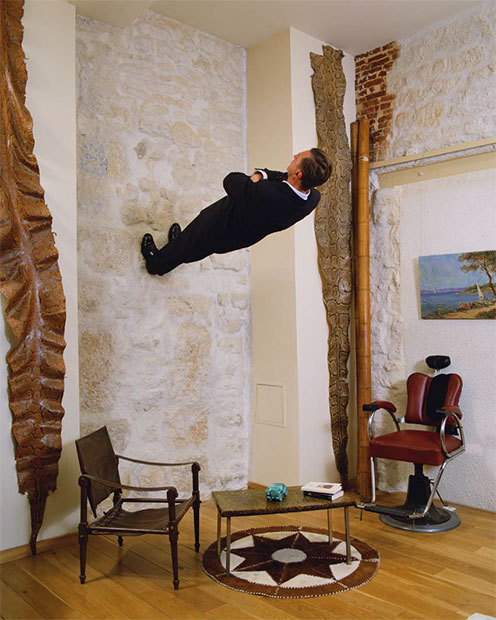
Defy Gravity!


This past week I listened to Dr. Gene Carter, Executive Director of ASCD, deliver his opening remarks at our Leader to Leader conference in a crowded ballroom of eager ASCD leaders from around the world. He addressed many important themes for the conference, but one phrase jumped out of me in its startling simplicity: “Defy gravity!” I tweeted it out right away, and then let it sit with me the next few days of the conference to appreciate its full impact.

Gravity…that force that pulls us down and makes us feel our weight…is such a constant in our lives we assume we have to operate under its impact all the time…not just our physical weight…but the weight of our experiences, too. If we believe we are weighed down with our lot in life, that we cannot will change to happen…it constrains us in everything we do…limiting our future.

I started my career in education in 1985 fresh out of the Ohio State University (Go Buckeyes!) and I saw limitless possibilities for making a difference. Why not? I had no track record to define who I was or how I could succeed. But over the years, I honed my skills and found ways to make a difference. My creative tools were vertical files full of snail-mailed resources, acetate sheets on overhead projectors, filmstrips, carousel slide shows, VCRs, display cases, paper-and-scissors clip-art and dry transfer lettering. I made learning come alive for my students through every industrial-aged tool at my disposal. I loved my work.

Then came computers and school networks and the Internet into our classrooms. It was new and different and required us to think of different ways to be successful. I felt the weight of my past experiences making me worry about using these new tools and the different ways of thinking I would need to use them. But gravity acts on mass, and I had only been teaching a few short years...so I shook off my anxiety, jumped in, and before I knew it I was leading online student projects, collaborating online with other teachers, and finding new ways to make learning come alive. I defied gravity...even though it wasn't that difficult in hindsight.

Then came social media. I had an award-winning static website http://surfaquarium.com that I put endless hours into maintaining, several well-respected email distribution lists I had developed into thriving online communities, and ongoing invitations to present at major conferences about my work, but nothing had prepared me for this. Web 2.0? The Read-Write web? Blogs? Wikis? MySpace? I was so busy doing my thing I hadn’t seen this coming! Again I felt the gravity of my experiences pulling at me, and this was much harder because I was that much deeper into my career. It made me question if I was up for more change when I already was established and successful. Why were the rules changing? What about all the work I had already done on my website and mailing lists? But I knew deep-down change had to happen, and I began migrating my online projects from YahooGroups to wikis and I found myself Tweeting and Facebooking. I even archived the Surfaquarium and made my blogging the only current content I keep updated. I defied gravity again.

What I realized each time is that my success isn’t defined by what I am comfortable and confident doing; it is defined by those people I impact positively through their preferred tools and modes of learning. If I don’t change, I can keep myself happy but the world will move ahead without me. It made sense within my whole multiple intelligences orientation: I can make it about my comfort zone and my past paths to success, but to those I seek to serve, I need to meet them at their needs and interests. My future needs to break free of my past… my future depends on theirs.

In 2010 I performed another act of defying gravity, walking away from my assistant superintendency to join the highly-respected folks at ASCD. I shed the weight of my success as a public school educator in order to serve the greater good through the world’s premier education association. I still get to work with educators at all levels, and the work is very rewarding. Yet the theme of gravity continues to make itself known, because all of us as educators continue to struggle with the world changing around us. We have been successful over the last half-century using traditional forms of communication and professional development, but these things simply aren’t serving our colleagues and students effectively any more.

So Dr. Carter’s challenge is very real…and as easy or as difficult as we want to make it: “Defy gravity!” Free yourself from your past life and ask yourself what you need to do to choose your future. Need to learn to reach out through concise tweets instead of lengthy newsletters? Learn to do it! Need to learn how to virtual-conference instead of waiting months to attend a face-to-face event? Let’s do it! Want to connect with like-minded educators from around the world to help you take your work to the next level? They’re waiting for you…online!

Defy gravity! Because if you allow your perceptions and apprehensions to weigh you down, your life and career will never be more than the sum of your past experiences. Are you willing to accept that? I didn’t think so. Me neither!